 Rummy.news Editorial Desk
Last updated: 2026-06-27
Online gaming tax stories can look simple when a headline focuses on a large number. They are rarely simple in the source trail.
For rummy and online gaming readers, the safer approach is to identify the tax source, the date, the period, the figure type, and what the source does not decide.
Start with the tax source
The strongest GST coverage starts with a document or clearly identified source type:
- GST Council material or government notification
- court judgment or order
- tax department notice or press release
- company filing or auditor note
- reputable tax or business reporting tied to a named document
If a story gives a large GST figure without saying where it comes from, readers should treat the figure as incomplete.
Label the number before interpreting it
Not every rupee figure means the same thing.
| Label to check | What it means for readers |
|---|---|
| Demand | A tax authority claim that may still be contested |
| Exposure estimate | A broader estimate that may combine multiple entities or periods |
| Liability | A stronger claim that should be tied to a final order, filing, or payment |
| Penalty or interest | Additional amounts that should not be merged casually with base tax |
| Sector figure | A market-wide number, not automatically one company’s amount |
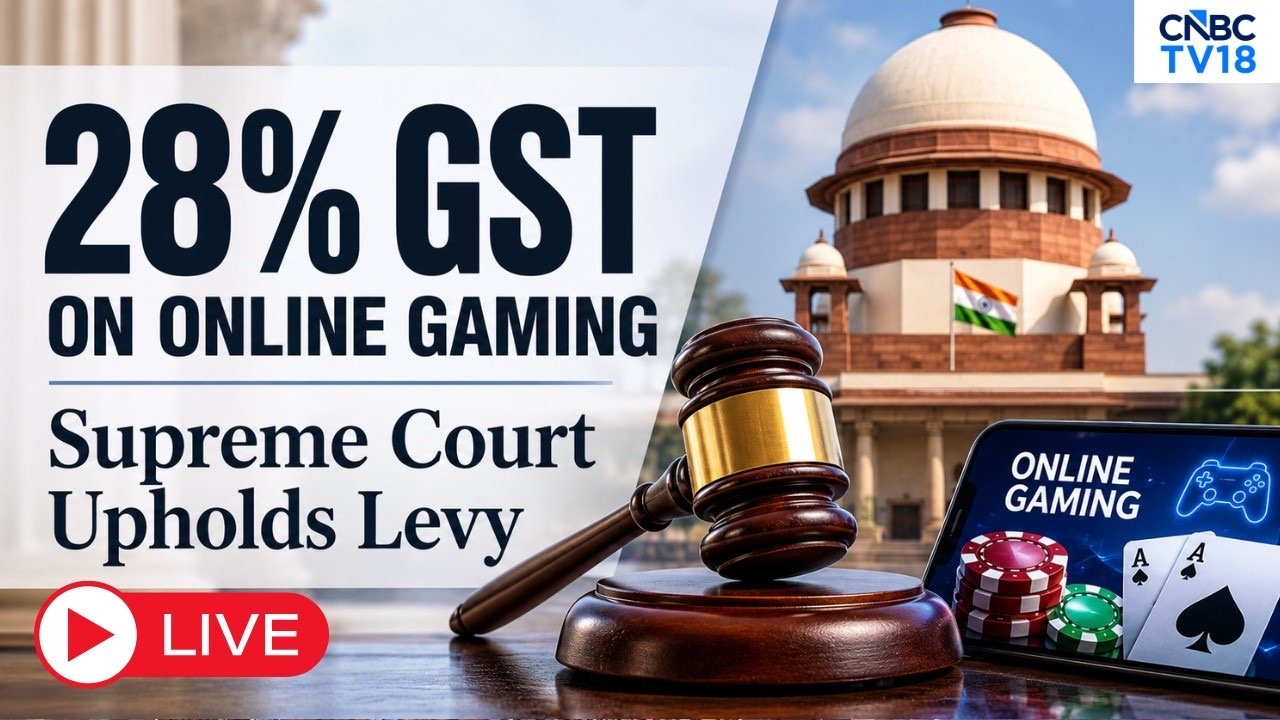
The Supreme Court’s Gameskraft-linked judgment and reputable reporting on retrospective GST demands make this labelling especially important.
Check the date and the period
Tax coverage should say both when a source was published and what period it covers. A 2026 judgment, a 2023 GST Council decision, and a later company filing can all be relevant, but they do not serve the same purpose.
Readers should ask:
- What date is on the judgment, filing, notification, or report?
- Does the number relate to pre-October 2023 activity, post-rule changes, or another period?
- Does the source discuss deposits, face value, gross gaming revenue, or another base?
- Is the article describing a final outcome or a live dispute?
GST does not answer every rummy-law question
GST treatment is a tax issue. It should not be used as a shortcut for state-law legality, central online-gaming determination, advertising compliance, or user-safety standards.
That boundary matters because rummy coverage often mixes skill-game language, state-law risk, tax exposure, and operator product claims. Each needs a separate source trail.
A practical reader checklist
Before trusting a GST claim about online gaming, check:
- Does the story link to a judgment, GST Council document, notification, filing, or named report?
- Does it identify whether the figure is a demand, estimate, exposure, penalty, or final liability?
- Does it state the date and period covered?
- Does it distinguish company-specific numbers from sector-wide figures?
- Does it avoid implying that GST treatment settles every rummy-law question?
- Does it include a legal or tax disclaimer when giving general analysis?
What to watch next
The next useful GST signals would be official recovery guidance, company-specific filings, review or clarification proceedings, or tax disclosures that identify the period and amount in dispute.
For background, read What the 28% GST Ruling Means for India’s Online Gaming Industry, Gameskraft GST Case Explained: Why It Matters for Rummy Operators, and Online Gaming GST.
Disclaimer: This article is for news and general information only and is not legal, tax, financial, or investment advice.
FAQ
Does a GST demand mean the amount has been finally paid?
Not necessarily. A demand can be contested or still subject to further proceedings, depending on the source and stage.
Does GST treatment decide whether users can play rummy in a state?
No. GST is a tax issue. State law, central rules, product facts, and court records are separate questions.
Why do dates matter so much in GST stories?
Because GST rules, court rulings, and company disclosures can refer to different periods and legal stages.
Sources
- GST Council website
- GST Council 50th meeting recommendations page on online gaming, casinos, and horse racing
- Supreme Court judgment PDF in DGGI v. Gameskraft Technologies, dated 27 May 2026
- Economic Times report on retrospective GST ruling, published 27 May 2026
- Economic Times report on GST full-value deposit impact, published 29 May 2026