 Rummy.news Editorial Desk
Date: 2026-06-06
Summary: Investors tracking India’s gaming sector in 2026 are watching a smaller post-RMG market, the after-effects of the Supreme Court’s GST ruling, the role of listed proxy Nazara, and whether operators can build durable non-money businesses.
Key takeaways
- This is company and market-intelligence coverage, not an app review, ranking, or investment recommendation.
- Company pivots, GST exposure, enforcement signals, layoffs, and compliance posture can show where the sector is moving.
- Read company updates together with the Rummy Companies, Online Gaming GST, and India Rummy Law hubs.
India’s gaming market in 2026 is no longer being valued on the assumptions that drove the real-money boom. The core investor questions now revolve around regulation, taxation, concentration, product diversification, and whether the sector can rebuild without the revenue base that once came from real-money contests.
This matters to Rummy.news because rummy was one of the formats at the center of that older revenue model. A market-data lens helps explain what happens next for operators, investors, and readers trying to distinguish between rummy as a game and rummy as a regulated business line.
1. The market is smaller, and more concentrated
Fortune India reported on 12 May 2026 that ICICI Securities estimated India’s gaming market had shrunk from roughly $6 billion to about $1 billion after the August 2025 real-money gaming ban. The same report said real-money gaming had previously accounted for about 88% to 90% of sector revenue and that the post-ban market was more concentrated around a few large players in non-money formats.
That matters because a smaller addressable market changes how investors evaluate growth stories. Scale alone is not enough if the most lucrative old model is gone and the remaining market is concentrated in a handful of free-to-play or entertainment-led businesses.
2. The legal and tax overhang is now part of valuation
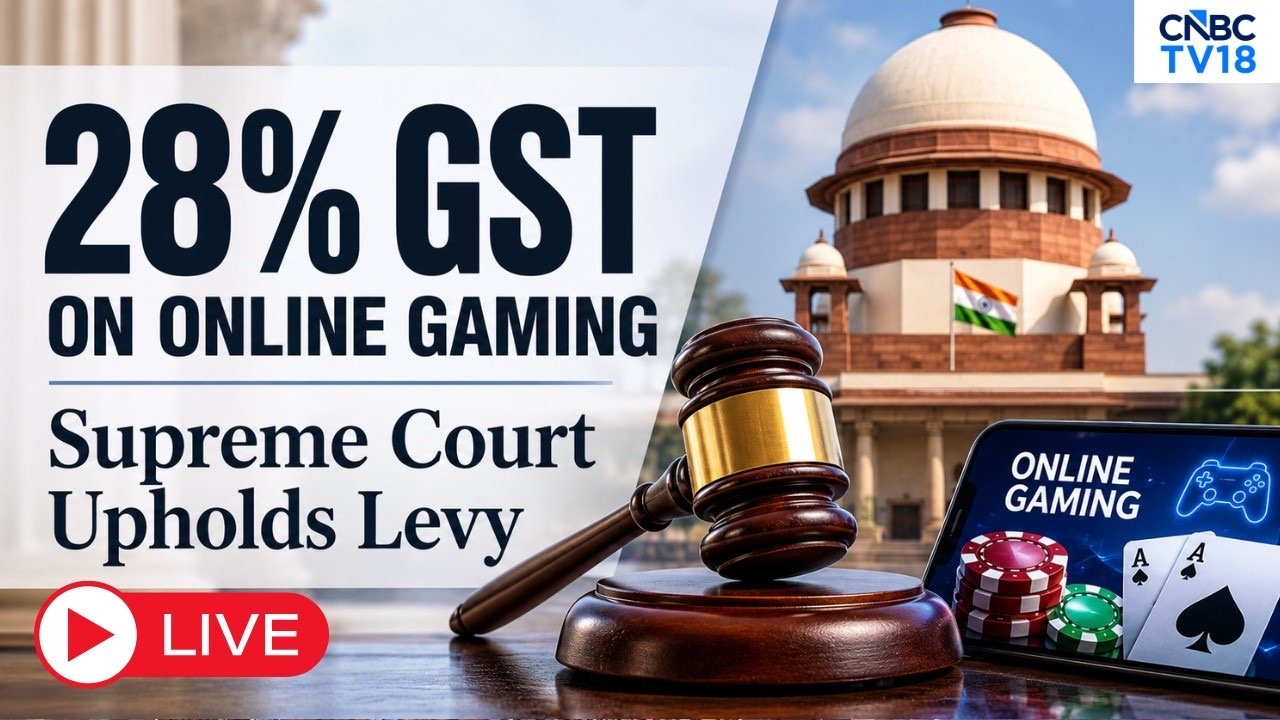
The Supreme Court’s 27 May 2026 judgment matters not only as a legal milestone but as a valuation input. In the judgment, the Court said there was “no legal shelter” for the claim that placing stakes on games of skill would not amount to betting and gambling, and it also emphasised that the existence of a stake, not only the underlying character of the game, is central to the analysis.
For investors, that means the skill-versus-chance debate is no longer enough as a shorthand for sector safety. The 28% GST explainer remains essential because tax exposure now sits alongside operating-model risk.
3. Public-market proxies are being watched more closely
Nazara matters because it remains India’s only listed gaming company, which gives public investors a rare visible proxy for the sector. Even though Nazara is not a rummy pure-play, its strategy, disclosures, and market reaction help readers interpret where capital may still see durable gaming value.
Moneycontrol reported on 2 June 2026 that Delta Corp shares had fallen 22% in three sessions and Nazara Technologies had declined 7% after the Supreme Court GST setback. That does not mean every gaming company is identical, but it shows how quickly legal and tax shocks can flow into market pricing.
This also explains why Rummy.news should keep linking market stories to company coverage such as the Nazara market watch, Games24x7 company watch, and Junglee Games company watch.
4. Diversification is the central strategy test
If the old real-money engine has been broken, investors will look for new engines: free-to-play gaming, esports, IP-led games, ad-tech, subscriptions, in-app purchases, and international expansion. Fortune India’s summary of the ICICI report also said a meaningful part of former RMG demand may have moved offshore through crypto routes, which adds another reason not to equate historical user demand with future domestic monetisation.
The key investor question is therefore not whether demand for gaming still exists. It is whether Indian gaming companies can convert that demand into compliant, defensible, cash-generating products.
Why this matters for rummy readers
Rummy readers do not need to become equity analysts to use these signals. They only need to understand that capital, compliance, and business-model change now shape what kind of rummy-related products and coverage remain viable. Market structure can determine whether companies double down, pivot, or disappear.
Bottom line
In 2026, investors are watching India’s gaming market through four filters: how much of the old market survived, how courts and tax authorities frame stakes-based products, which listed or quasi-listed proxies remain useful, and whether diversification can replace real-money revenue. Those are now core rummy-industry questions, not side issues.
Disclaimer: This article is for news and general information only and is not legal, tax, financial, or investment advice.
FAQ
Why should a rummy publication care about investor signals?
Because investor expectations shape company strategy, product pivots, and which business models survive.
Is Nazara a substitute for the whole gaming market?
No. It is a partial public-market proxy, not a full map of the sector.
Does this article recommend buying or selling gaming stocks?
No. It is market context only.