 Rummy.news Editorial Desk
Date: 2026-06-11
Summary: Today’s brief focuses on implementation signals rather than rumor-chasing: how the online gaming rules are being framed in official materials, what the data and grievance obligations imply, where policy capacity is building, why state-law risk still matters for rummy, and what public-market disclosures are signalling.
1. The rules are now being framed as a live compliance system, not just a policy announcement
What happened: PIB’s 30 April 2026 explainer said the Promotion and Regulation of Online Gaming Rules, 2026 came into force on 1 May 2026 and marked the shift from broad legislative intent to enforceable regulation.
Why it matters: For rummy and online gaming coverage, the main question is no longer whether the rules exist. It is how operators, intermediaries, and regulators apply a classification, registration, grievance, and enforcement stack in practice.
Source: PIB explainer, “A New Era of Online Gaming Governance”, 30 April 2026
Source: PIB release on the Promotion and Regulation of Online Gaming Rules, 2026, 22 April 2026
2. Official materials are putting data storage and grievance handling closer to the center
What happened: New India Samachar’s late-May 2026 rules summary said Rule 17 requires user data to be stored within India and securely retained for a prescribed period. The same page said each gaming company must establish a user-grievance mechanism and that dissatisfied users may approach the Authority within 30 days.
Why it matters: This turns compliance into something more operational and auditable. For readers tracking rummy and adjacent gaming companies, data location, complaint handling, and disclosure quality are now part of the industry story.
Source: New India Samachar / PIB feature page, late May 2026
Source: PIB release on the Promotion and Regulation of Online Gaming Rules, 2026, 22 April 2026
3. MeitY’s 2026 internship scheme suggests policy capacity-building is underway
What happened: The Digital India Internship Scheme 2026 listed one internship slot for “Policy on Online Gaming” and one for “Online Gaming”, with the internship cycle commencing on 1 June 2026 and running through 31 July 2026.
Why it matters: This is not a regulatory order by itself, but it is a useful signal that online gaming is now treated as a standing policy and administrative subject inside the MeitY ecosystem, not just a one-off headline issue.
Source: Digital India Internship Scheme 2026 (MeitY)
Source: Digital India Internship Scheme 2026 result notice (MeitY)
4. The Supreme Court’s 27 May ruling still hangs over any rummy-for-stakes discussion
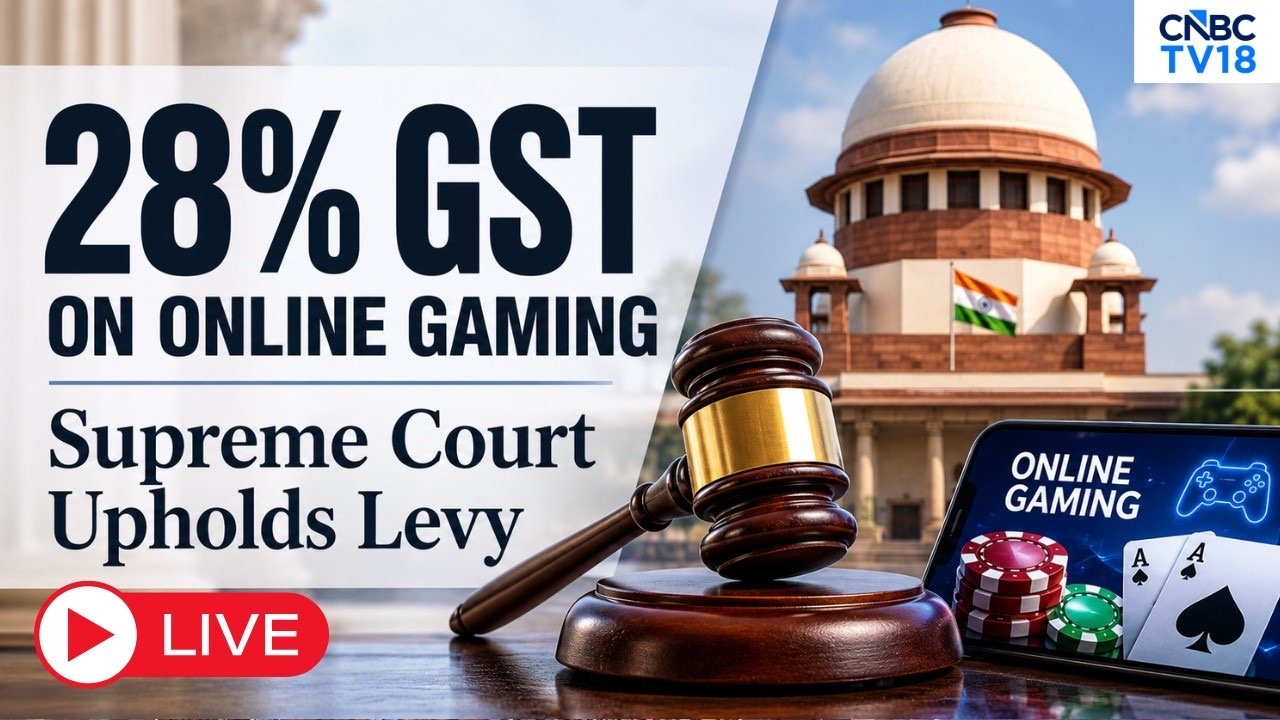
What happened: In its 27 May 2026 judgment, the Supreme Court upheld key Tamil Nadu and Karnataka provisions targeting online rummy and poker played for stakes and set aside earlier High Court relief for operators.
Why it matters: Even as central rules become more detailed, state-law risk remains a core part of the legal picture. For rummy coverage, skill-game language alone is not a complete shield once money or stakes enter the frame.
Source: Supreme Court judgment in *State of Tamil Nadu v. Junglee Games India Pvt. Ltd.*, 27 May 2026
Source: Economic Times report on the judgment, 27 May 2026
5. Nazara’s official FY26 materials keep public-market attention on diversification and overhangs
What happened: Nazara’s investor site says FY 2025-26 delivered 19.5% EBITDA margin, 52% EBITDA growth, and 66% PAT growth, while the company’s May 2026 newspaper publication shows consolidated FY26 total income from operations of Rs 3,072.56 crore. The same official filing set also flagged impairment linked to the 2025 online money games prohibition and unresolved GST notices in group entities.
Why it matters: Nazara is not a pure rummy operator, but it remains a visible listed proxy for how capital markets are pricing gaming businesses after the real-money reset. Readers should treat it as a market signal, not a substitute for company-specific legal analysis.
Source: Nazara investor relations
Source: Nazara newspaper publication for quarter and year ended 31 March 2026
Source: Nazara annual results filing hosted on the investor site, 12 May 2026
What to watch next
- Whether the Online Gaming Authority begins publishing more visible lists, codes of practice, or grievance outcomes.
- Whether operators make more explicit disclosures on data storage, user-safety controls, and product classification.
- Whether listed gaming companies continue to separate diversified growth stories from legacy GST and enforcement overhangs.
Disclaimer: This article is for news and general information only and is not legal, tax, financial, or investment advice.
FAQ
Why is this brief focused more on implementation than breaking news?
Because today’s strongest credible signals are about how the rules and market reset are being operationalised, not a fresh one-off announcement.
Does the Supreme Court ruling make all online rummy illegal in India?
No. It is a high-impact state-law signal, but the regulatory picture still depends on product design, stakes, state law, central rules, and enforcement.
Why include Nazara in a rummy and online gaming brief?
Because it remains one of the clearest public-market indicators of how Indian gaming businesses are being repriced after the sector reset.
Sources
- PIB explainer, “A New Era of Online Gaming Governance”, 30 April 2026
- PIB release on the Promotion and Regulation of Online Gaming Rules, 2026, 22 April 2026
- New India Samachar / PIB feature page on data storage and grievances, late May 2026
- Digital India Internship Scheme 2026 (MeitY)
- Digital India Internship Scheme 2026 result notice (MeitY)
- Supreme Court judgment in *State of Tamil Nadu v. Junglee Games India Pvt. Ltd.*, 27 May 2026
- Economic Times report on the Supreme Court judgment, 27 May 2026
- Nazara investor relations
- Nazara newspaper publication for quarter and year ended 31 March 2026
- Nazara annual results filing hosted on the investor site, 12 May 2026