 Rummy.news Editorial Desk
Date: 2026-06-10
Summary: Today’s brief focuses on the signals still shaping India’s rummy and online gaming market after the first regulatory shockwave: state-law risk, enforcement pressure, GST aftershocks, product-classification rules, and public-market strategy.
Key takeaways
- This daily brief is a signal map for India’s rummy and online gaming market, not legal, tax, financial, or gaming advice.
- Each item should be checked against its source date and the latest regulatory or company disclosure.
- For deeper context, use the Rummy.news law, GST, company, and responsible gaming hubs linked below.
1. The Supreme Court’s state-law ruling is now a central rummy risk marker
What happened: In its 27 May 2026 judgment in *State of Tamil Nadu v. Junglee Games India Pvt. Ltd.*, the Supreme Court allowed the appeals by Tamil Nadu and Karnataka, set aside earlier High Court rulings, and upheld key state-law provisions targeting online rummy and poker played for stakes.
Why it matters: This is one of the clearest recent reminders that state-level restrictions still matter even when a game has a skill component. For rummy coverage, legality can no longer be treated as only a central-rules or GST question.
Source: Supreme Court judgment, 27 May 2026
Source: Economic Times report on the judgment, 27 May 2026
2. Gameskraft enforcement pressure remains part of the sector’s risk picture
What happened: The Directorate of Enforcement said on 14 May 2026 that it froze assets worth about Rs 526.49 crore in a Gameskraft-linked probe, naming several rummy-linked platforms and describing allegations around bot-linked play, geolocation, and state restrictions.
Why it matters: The industry’s risk stack is now broader than tax and rules alone. Enforcement and platform-integrity scrutiny remain active editorial signals for rummy-sector readers.
Source: Directorate of Enforcement press release, 14 May 2026
3. The GST ruling’s aftershock is still shaping market sentiment
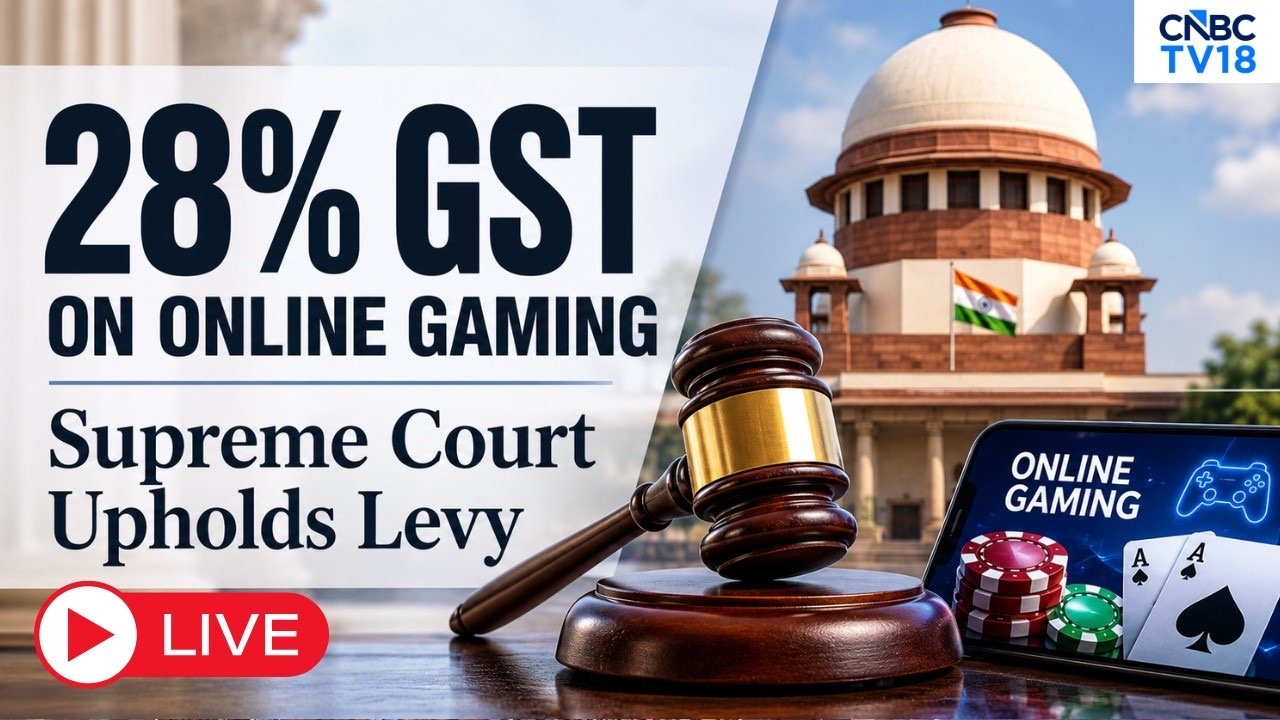
What happened: Moneycontrol reported on 2 June 2026 that Delta Corp and Nazara Technologies fell after the Supreme Court backed the 28% GST levy on online gaming and retrospective tax demands.
Why it matters: The market reaction shows that GST is still being priced as an operational and balance-sheet risk across India’s gaming sector, including businesses that rummy readers track indirectly through public-market signals.
Source: Moneycontrol market report, 2 June 2026
4. Official rules now focus on how money-linked products actually work
What happened: PIB’s 22 April 2026 release on the online gaming rules said online money-game determination depends on factors such as stakes or fees, expected monetary winnings, provider revenue structure, and whether rewards or in-game assets can be monetised outside the game.
Why it matters: That framework moves the policy conversation beyond abstract labels. For rummy-sector coverage, it means product design, monetisation, and redemption mechanics matter alongside the older skill-versus-chance debate.
Source: PIB release on the online gaming rules, 22 April 2026
5. Diversified gaming strategy still stands out in public-market coverage
What happened: Times of India reported on 15 May 2026 that Nazara’s Q4 revenue fell 17% year on year while profit rose sharply, highlighting how listed gaming companies are being judged on diversified operating performance rather than real-money exposure alone.
Why it matters: Nazara is not a pure rummy operator, but it remains a useful market signal for how investors may value broader gaming resilience after India’s real-money gaming reset.
Source: Times of India on Nazara’s Q4FY26 results, 15 May 2026
What to watch next
- Whether operators disclose state-specific compliance adjustments after the Supreme Court’s 27 May ruling.
- Whether the Gameskraft enforcement cycle produces more court filings, company responses, or public disclosures.
- Whether more listed or large private companies explain how they are balancing GST exposure, product mix, and compliance spending.
Disclaimer: This article is for news and general information only and is not legal, tax, financial, or investment advice.
FAQ
Why does this brief combine a court judgment, GST and company signals?
Because the sector’s current risk picture is overlapping: state law, tax, enforcement, product design, and company strategy now interact.
Does this brief say online rummy is illegal everywhere?
No. It tracks major regulatory and market signals without making a universal legality claim.
Why include Nazara on a rummy publication?
Because it remains one of the clearest public-market indicators of how Indian gaming strategy is evolving after the real-money gaming reset.
Related Rummy.news hubs
Sources
- Supreme Court judgment in *State of Tamil Nadu v. Junglee Games India Pvt. Ltd.*, 27 May 2026
- Economic Times report on the Supreme Court judgment, 27 May 2026
- Directorate of Enforcement press release, 14 May 2026
- Moneycontrol market report after the GST ruling, 2 June 2026
- PIB release on the Promotion and Regulation of Online Gaming Rules, 2026, 22 April 2026
- Times of India on Nazara’s Q4FY26 results, 15 May 2026